Using Voyant, I selected Edgar Allen Poe’s five-volume collected works from Project Gutenberg and noted the word frequency throughout to think about temporality and corporeality in Poe’s writing, particularly through the new directions in queer studies of Poe’s work. I was curious beginning the text mining assignment how or if the frequency of words indicate his focus on these two concepts and if there is any way from a distant reading of Poe’s work to think about it queerly.
Under the “distinctive words” category in the “summary” section for Volume 1, I noticed that “body,” “mind,” and “corpse” are frequently “distinctive words” that appear throughout his work, which lends to thinking about his preoccupation with the the body and the mind, as well as death and decay. Initially, I was curious why “balloon” and “Marie,” but the first volume has “The Balloon-Hoax” and “The Mystery of Marie Roget” in them, which accounts for that.
Word cloud for volume 1: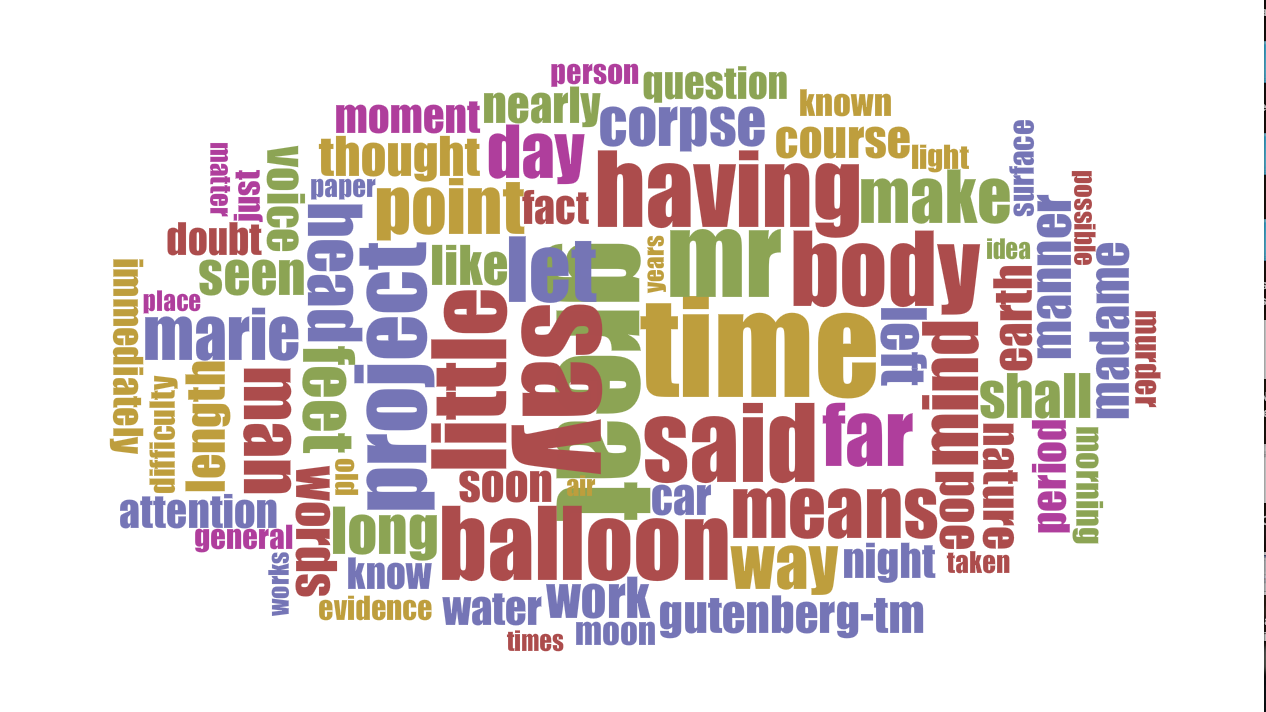
Word cloud for volume 3:
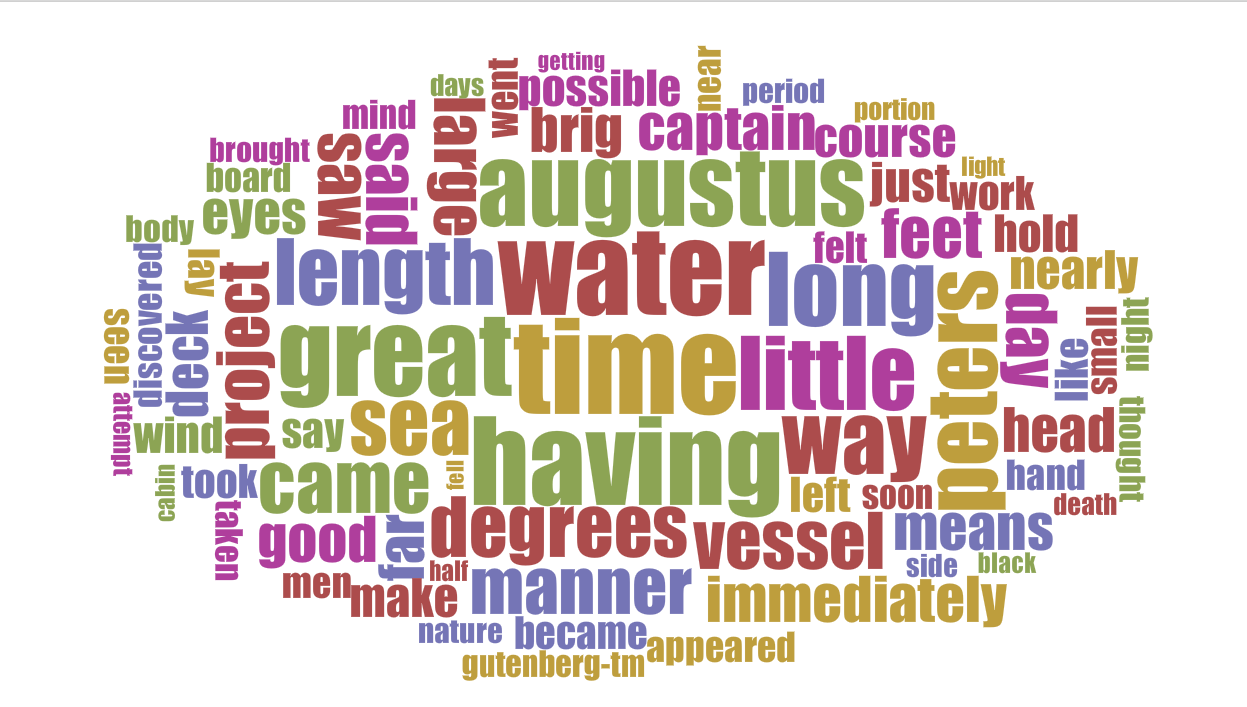
Moving to volume 2 and 3, “body” is still frequent, but lessens from 89 times in the first volume. The “word trends” graphs show the decline in the appearance of “body” throughout the volumes. Poe seemed to have a strong and consistent focus on the corporeal throughout his work. This appears in words other than just “body,” and I wonder if this could also be apart of his focus on the grotesque? For Volume 2, the word cloud still has “time” standing out, but then other words beyond just the word “body” also appear: “eyes,” “head,” “hand,” “heart,” and “man.” The distinguishing bodily parts come out in the second volume in particular. These appear in volumes 3 and 4, as well, but not as prominently as in volume 2.
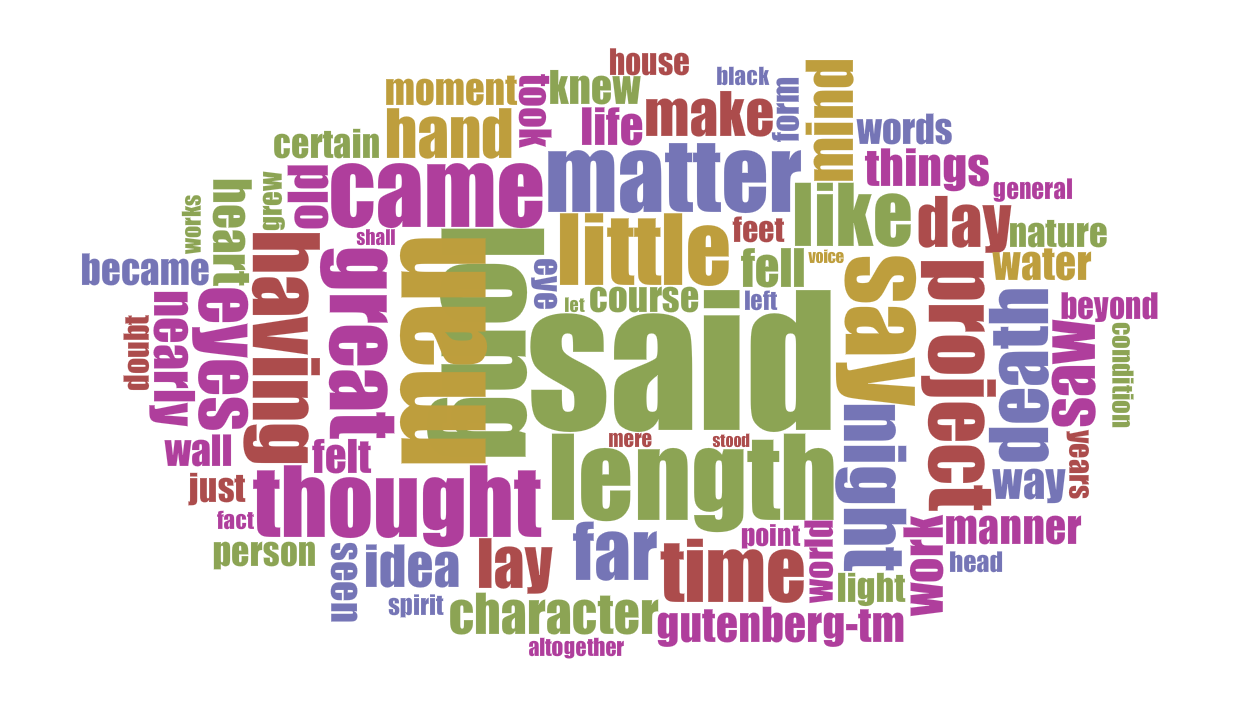
“Time” frequently appears through all volumes and shows up prominently in every word cloud for each separate volume. I wonder if this could also indicate a possible queer reading of Poe’s work. His work frequently plays with conceptions of temporality, which he appears to be highlighting by his frequent use of the word throughout all of his writing.
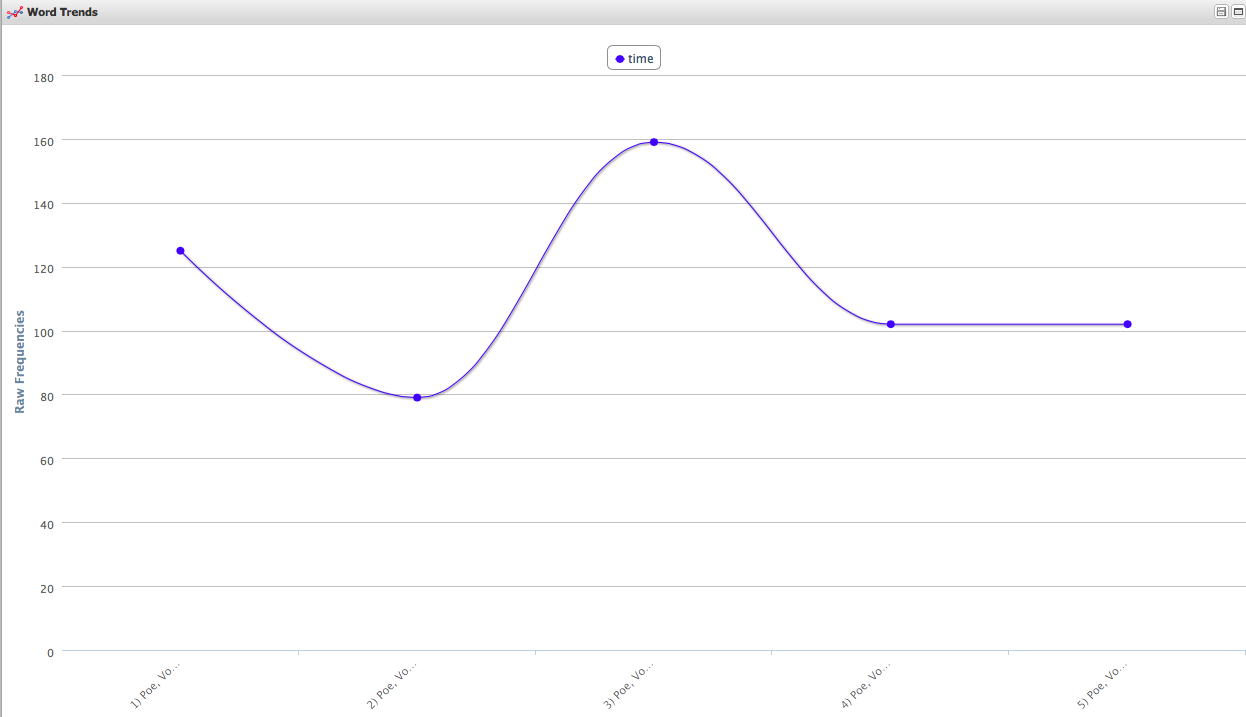
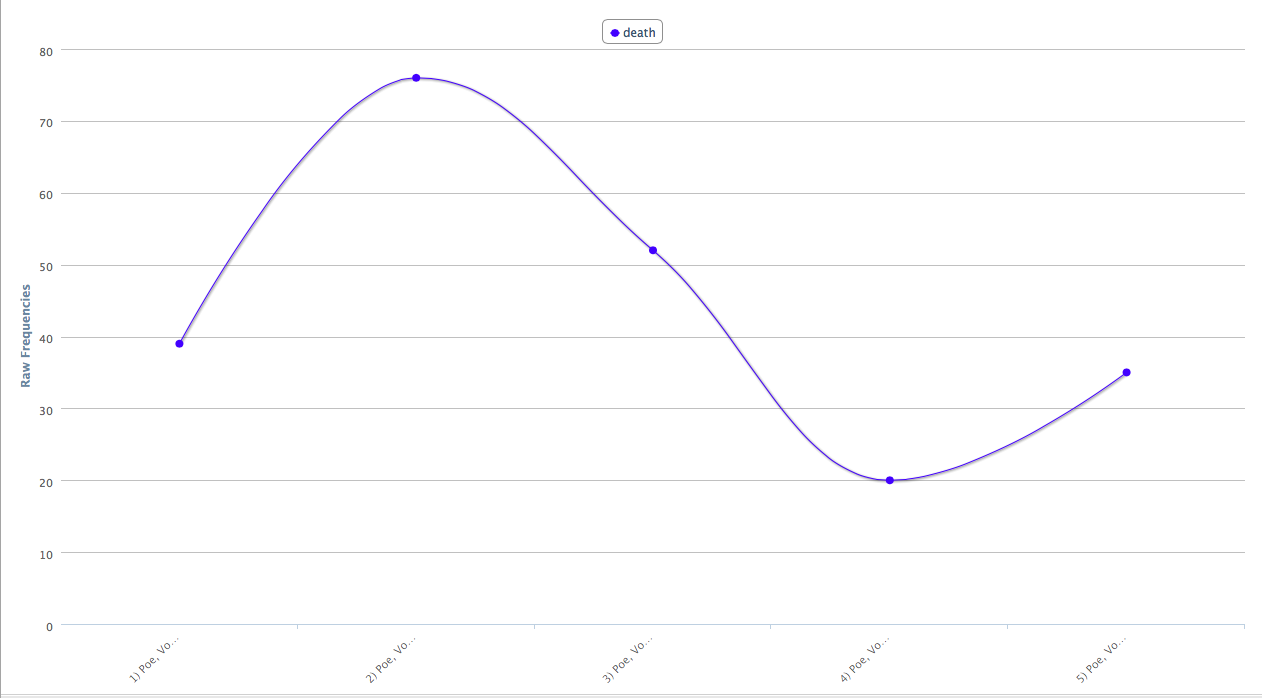
Though this is smaller sample of the charts of graphs for Poe’s 5 volume collection, I am interested how time and bodies relate to one another in Poe’s work. His writing plays with conceptions of temporality and corporeal reality, which appear as themes in the word frequency throughout his collected work. I was a bit surprised that the imagery of death didn’t appear more frequently in the text, but instead was mostly about the body and time.
For HTRC, I looked at 30 books of poetry by black poets in the 19th century south. I mostly used collections by Paul Laurence Dunbar and George Moses Horton along with James Wheldon Johnson, Frances Ellen Watkins Harper, and Georgia Douglas Johnson. I used the Topic Modeling Algorithm and came up with this:
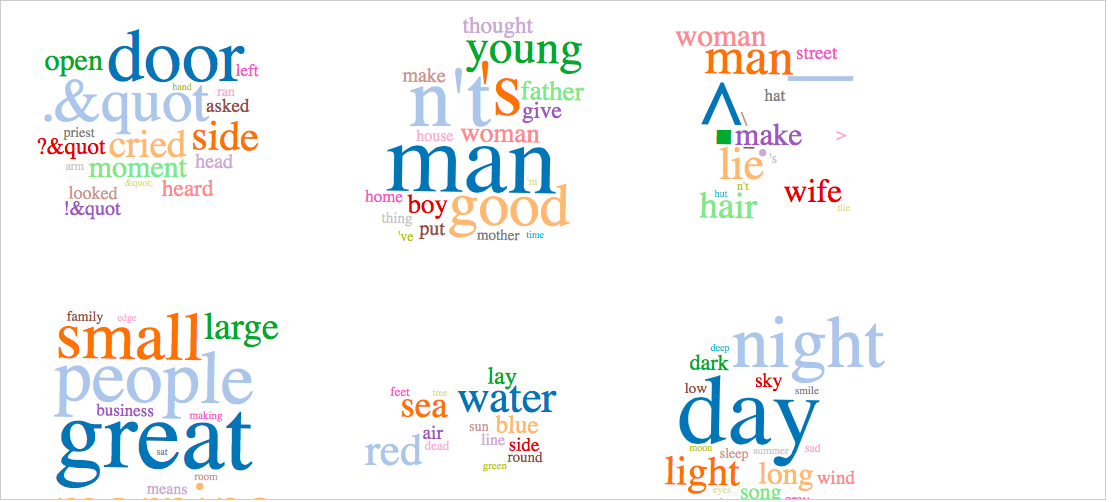
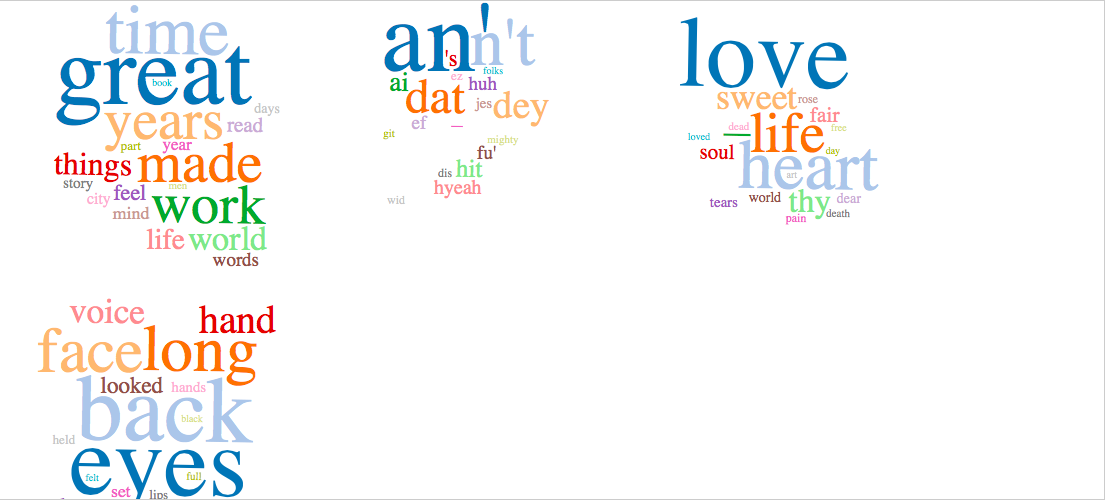
For the HTRC clouds, I was curious about what words were frequently used together by black southern poets of the 19th century and what these clusters could indicate about the trends throughout their work. I’m working on a project on Paul Laurence Dunbar, so I was curious about what some of the threads were throughout his contemporary poets, as well. There are a lot of apostrophes throughout, which in poetics can often signify absence and a complicated duality of presence, as well. I see this throughout a few of the clusters, which could signify black presence in the south, but a vocal absence, which these poets are working within.

