For my post, honestly, I had no idea what project to pick so I picked two.
In my exploration of digital humanities tools and projects, I wanted to find projects that dealt with the concepts of transcendence and what it means to not only be human but to be a “digital” human resonated with me the most would mean, and to me, this would mean being connected and understanding networks like Katherine Hayles states, “Information, like humanity, cannot exist apart from the embodiment that brings it into being as a material entity in the world” (49). I wasn’t sure if we could as Wendy Hui Kyong Chun states, “transcend the physical limitation of your own body” (6). So, I wanted to find projects that had networks or created connections, tried to transcend the physical body, and/or challenged the “canons” because I think if we are more connected then we would not stand for only one perspective.
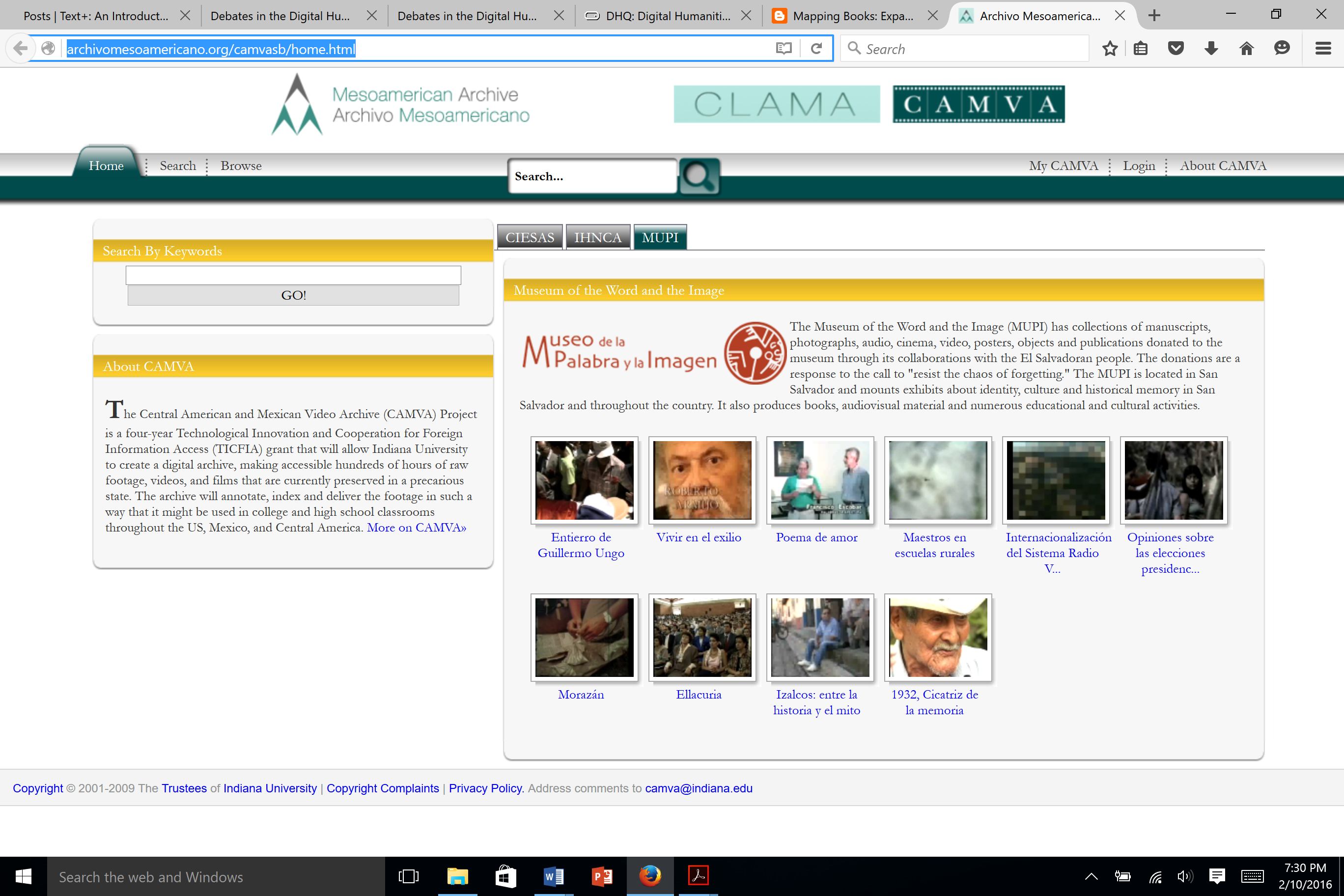
I first chose the Mesoamerican Archive because it is trying to preserve memory, particularly video and audio, to inspire cultural activities and to tell their narratives, perhaps even foster connections with others who are outside of this network but still interested in it. Additionally, ironically, this embodies the idea of literally transcending the physical body by preserving a representation of the physical.
I also found a really cool project/article that connected with Mapping the Republic of Letters! Mitch Fraas created Expanding the Republic of Letters: India and the Circulation of Ideas in the Late Eighteenth Century to include India in the Republic of Letters! I thought this was cool because he is working outside of the canon but also enhancing a project by pointing out other parts of the network that were left out!
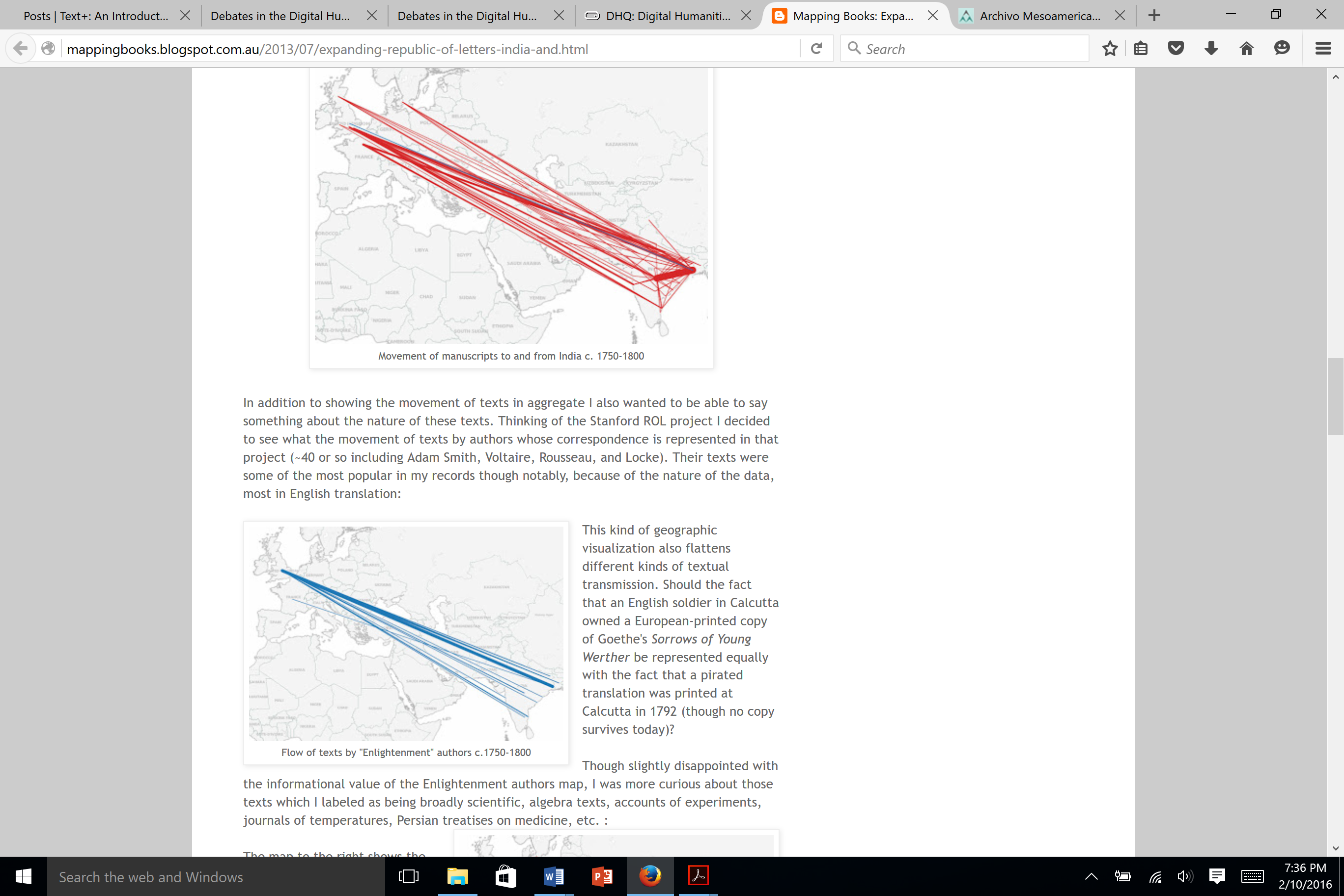
And the end of Mitch Fraas’s article fit with this week’s readings as they examine what we archive and earlier readings about being self-aware and self-critical: “At the end of this stage of work I realize just how central absence and omission are to any visualization of historical information. No matter how much I tried to “fill in the gaps” my visualization remains constrained by data available and historical uncertainty and I’ve come away knowing that while I may have added a useful addenda to the vision of the Enlightenment that ROL offers, it is far from complete and perhaps offers its greatest value in forcing us to ask what is missing.”

