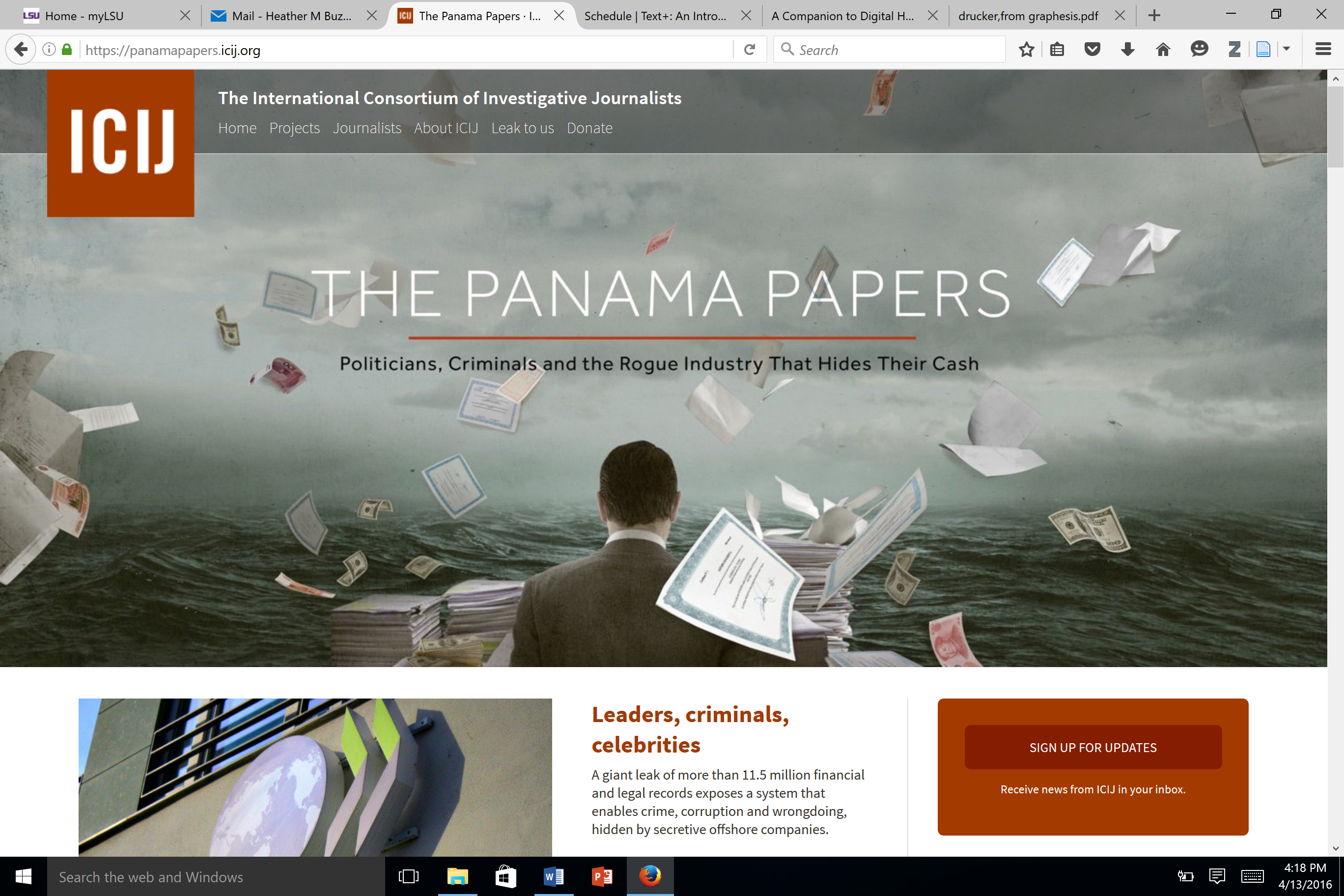
The Panama Papers is an interactive, informative website that outlines the ICIJ investigation of multiple political leaders and celebrities’ illegal activities evading taxes through offshore bank accounts. According to their website, “ICIJ and Süddeutsche Zeitung led a global investigation to unveil their secrets, publishing the first stories from ‘The Panama Papers’ on April 3, 2016.” They not only leaked these results to the web, but they even created a engaging, interactive website that walks the subject, as Drucker would say, through their data, methodology, and profiles of the people involved in this tax evasion. I thought this interface was particularly interesting in terms of both Drucker and Kirschenbaum’s pieces since this interface is both well-constructed, easy to navigate, and interactive while dealing with sensitive, political, information.
I really liked this website because it was very well put together. One of the first things we pointed out in the class was the aesthetics of the websites, and Kirschenbaum really deals with the tension between usability and beauty, as he quotes Gelernter who also points out, “the importance of beauty is a consistent…thread in the software literature”. I think this interface definitely balances between being aesthetically pleasing and usable.
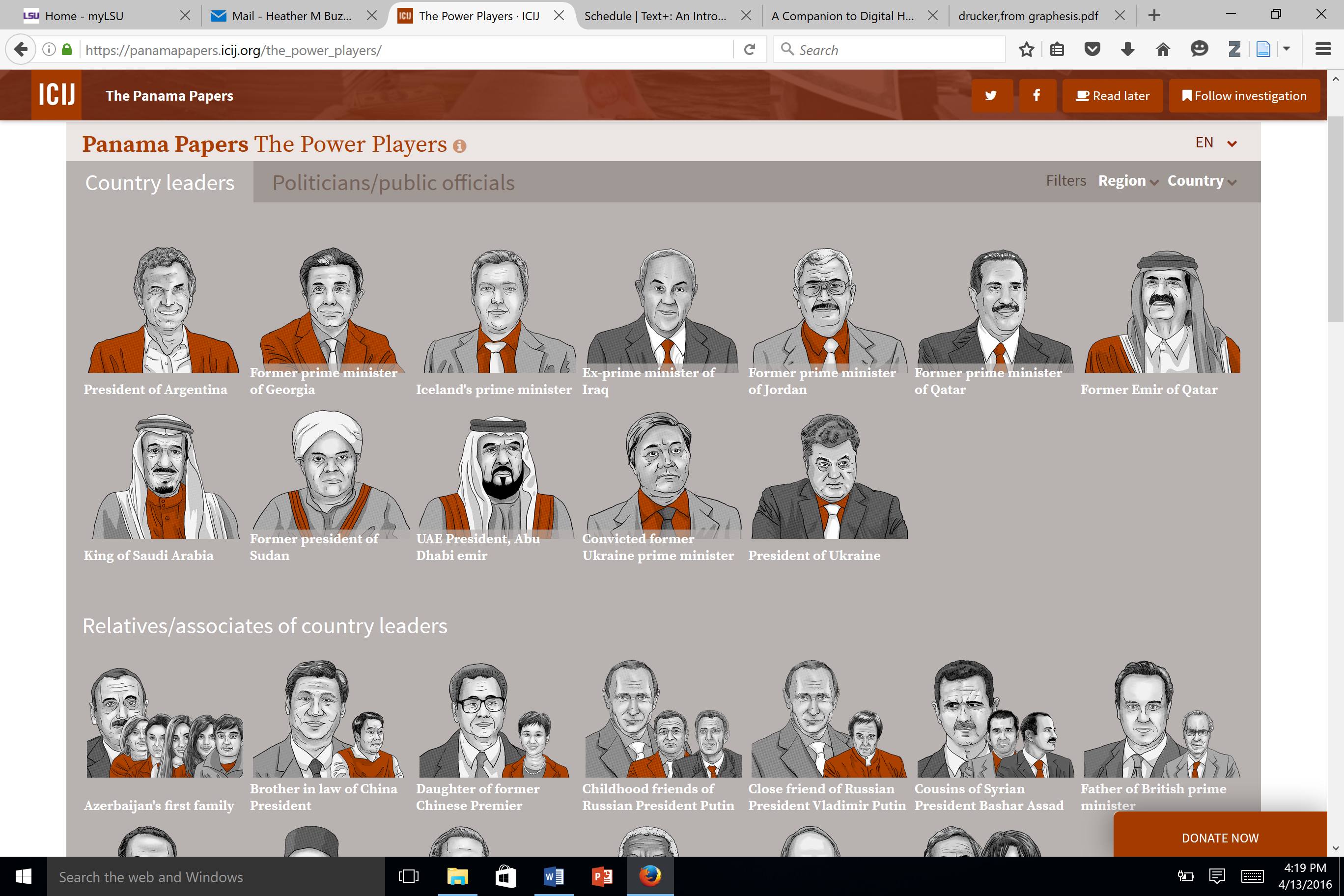
Additionally, while the website may oversimplifies the complicated processes involved with the illegal acts and obtaining the data, the interface is clean and easy to follow, mirroring the content which is also clean and easy to understand. From the interface, they also construct a clear narrative of the situation as they see it.
The interface also highlights Drucker’s idea of communities and networks and how they are represented in web environments:
“The new condition of scholarly activity is relational and dynamic. To visualize these networked relations, communities of scholarly exchange, argument, comment, linked references, framings, and embedded citations, new conventions that do not rely on book structures are emerging. Informational derivative of data mining, analytics, visualization, and display are increasingly a part of a reading environment in scholarly, political, and business activity. We have to imagine the design of a situation of sustained activity, a series of events.” (Drucker 176).
Not only does this interface showcase illegal networks and communities, but this interface and the data on it was only able to be obtained through these digital communities and networks just as it reveals illegal networks that were going on offshore to evade taxes. Additionally, like Sarah’s post, I thought it was interesting to look at an interface that dealt with the literal faces of illegal activities.
While I do really like the layout and design of this website, playing Devil’s advocate, I would like to further analyze this interface for the narrative it is telling as Drucker states, “Web environments not only make use of its dynamic graphics, with sliders, time-lines, and animations but also create spaces in which montage principles and editing techniques used in narrative come into play” (46). As Drucker says, this website’s interface tells a distinct story, through the cartoon sketches and easily manageable data, and I would be interested in analyzing this story further and its effect on the subjects that interact with it.

