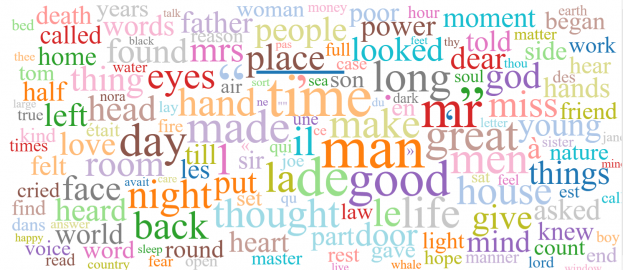
Starting out, I did not have a clear idea of a set of texts I wanted to use text mining to explore. It was while investigating the Project Gutenberg website that I noticed the site allowed you to sort their items by popularity. The top five texts most downloaded are, in order: Pride and Prejudice, The Yellow Wallpaper, Alice’s Adventures in Wonderland, Frankenstein, and Adventures of Huckleberry Finn. Primary observations of this list: 3 of the 5 texts were written by women, all 5 authors were white, all 5 were originally composed in English (number 6 on the list is Kafka’s Metamorphosis. I find this especially amusing considering the nationality of the project’s namesake), 3 of our authors are British, and 2 of our authors are American. I point out these observations because a list based on popularity undoubtedly brings up questions of the canon. I don’t know the demographics of the typical Project Gutenberg user. Can we assume these downloaders are students who have been assigned these books? Or might they be pleasure readers, who us finally got around to their reading bucket list? In either case, the question remains: why are these books the most downloaded? Can we find any similarities in word content in these works?
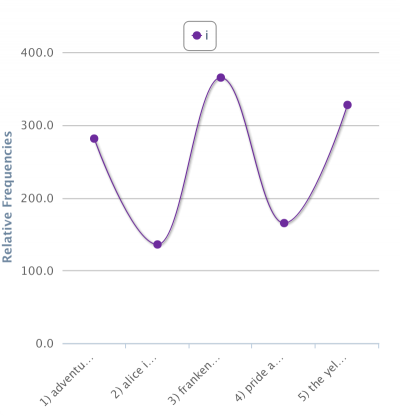
The most commonly used word was said, a trend I’m sure many of you have also observed. (People say things in works! Cool!) Says was also high on the list of words. Both Frankenstein and Huck Finn used says around the same amount that they used said. Another highlight of word usage: the varying use of “I”. I would like to do further research on the popularity of first-person texts: are they growing in popularity, and if so, is their popularity related to our growing solipsism?
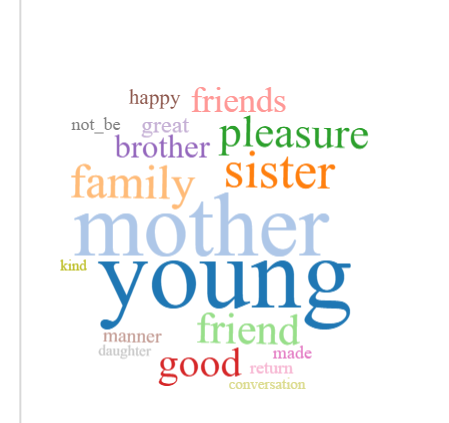
For my HathiTrust experiment, I entered as many of the books on the Project Gutenberg list that I could find, starting with the most popular and working my way down until I had 30 books collected. From the topic modeling algorithm, I see that time is a frequently discussed topic. Could the discussion of great works be related to their frequent discussions of time, considering the popularity of historicizing these works in order for undergraduates to understand them, find value in them, find significance in them?
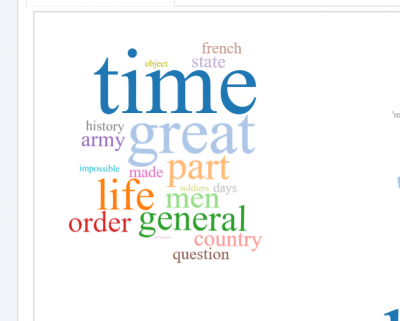
Another topic cluster which struck me, for similar reasons, is what I’ll call the youth and family relations cluster. If our goal in the humanities is to investigate human behavior, doesn’t it make sense to include those works which explore topics relatable to students? Regardless of your relationship with your family or your youth, each of us have or have had these things… I don’t want to delve into the territory of justifying the canon, and these are questions that have been considered before. But I do think text mining can help us to better explore some of these questions, as it allows us to step back from the text proper (in a way, to step back from our pre-formed assumptions of textual popularity and value) to see patterns of the whole.